
Nobody’s Getting a Rate Cut This Month. Here’s What the Fed Is Actually Signaling.

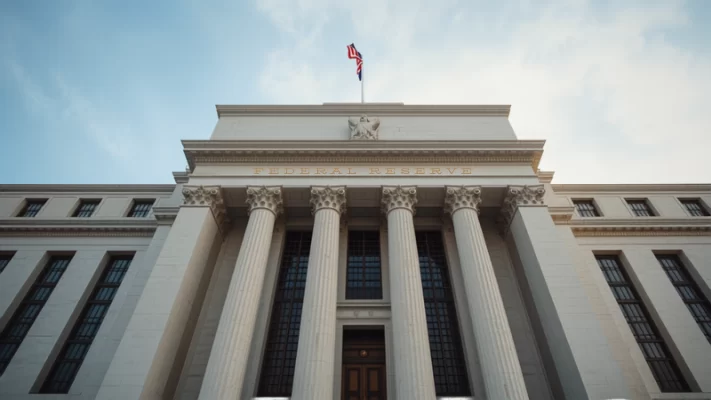
If you’ve been holding off on a big purchase because you figured the Fed would cut rates soon and everything would get cheaper to finance, it’s worth resetting that expectation. Futures markets right now are pricing in essentially a 0% chance the Fed cuts rates at its July 29 meeting. Most of the probability, around 75%, is on the Fed simply holding steady where it’s been. The remaining chunk, roughly 25%, is actually leaning toward a hike, not a cut.
That’s a meaningful shift from where things stood earlier in the year, when a lot of forecasts had rate cuts penciled in for mid-2026.
What changed
The Fed’s benchmark rate has been sitting at 3.50% to 3.75% for a while now, and the last meeting confirmed it’s staying there. Kevin Warsh, who’s now leading the Fed, was fairly direct that inflation is still running hotter than the committee wants, and he didn’t give much reason to expect a July cut based on anything he said afterward.
The committee’s own internal projections back this up. Coming out of the June meeting, the median expectation among Fed officials shifted toward ending 2026 with rates higher than where the year started, not lower. That’s a different story than the “gradual cuts through the year” narrative a lot of people were expecting back in January.
Why this matters beyond just the Fed’s own rate
The Fed’s benchmark rate doesn’t directly set your mortgage rate, your car loan rate, or your credit card APR, but it influences all three, just through slightly different channels.
Credit cards track the Fed rate most directly, since card APRs are typically set as prime rate plus a margin, and prime rate moves in step with the Fed’s decisions. A hold means card rates hold too. A hike would push them higher fairly quickly.
Mortgage rates are a step removed. They track the 10-year Treasury yield more closely than the Fed’s overnight rate, and that yield responds to a mix of things including inflation expectations and, right now, some geopolitical noise tied to the Middle East. But the broader “higher for longer” stance from the Fed still shapes the environment those yields move in.
Auto loans sit somewhere in between, sensitive to the Fed’s rate but also heavily shaped by each borrower’s individual credit tier, which is why the spread between the best and worst rates in that market is so much wider than it is for mortgages.
What this means if you’re planning a purchase
The practical takeaway isn’t complicated, even if it’s not the answer people want to hear. If you’ve been waiting for a rate environment that’s meaningfully better than today’s before financing a home, a car, or paying down card debt, the current market pricing doesn’t really support betting on that happening in the next few months.
That doesn’t mean nothing you do matters until the Fed moves. Shopping multiple lenders, improving your credit profile before applying, and negotiating card APRs directly with your issuer are all still effective regardless of where the Fed’s rate sits. Those levers are things you control. The Fed’s decision isn’t.
It’s also worth remembering that “higher for longer” isn’t a permanent state, just a current one. Fed policy shifts based on incoming data, and a run of weaker economic reports or a faster-than-expected drop in inflation could change this calculus by the next meeting. But planning your finances around a cut that the market itself currently says is very unlikely isn’t a great bet right now.
Analyze this content with AI